Behind the Old Stones
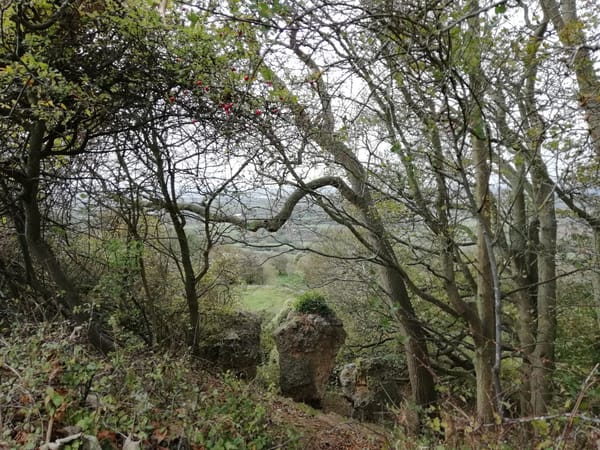
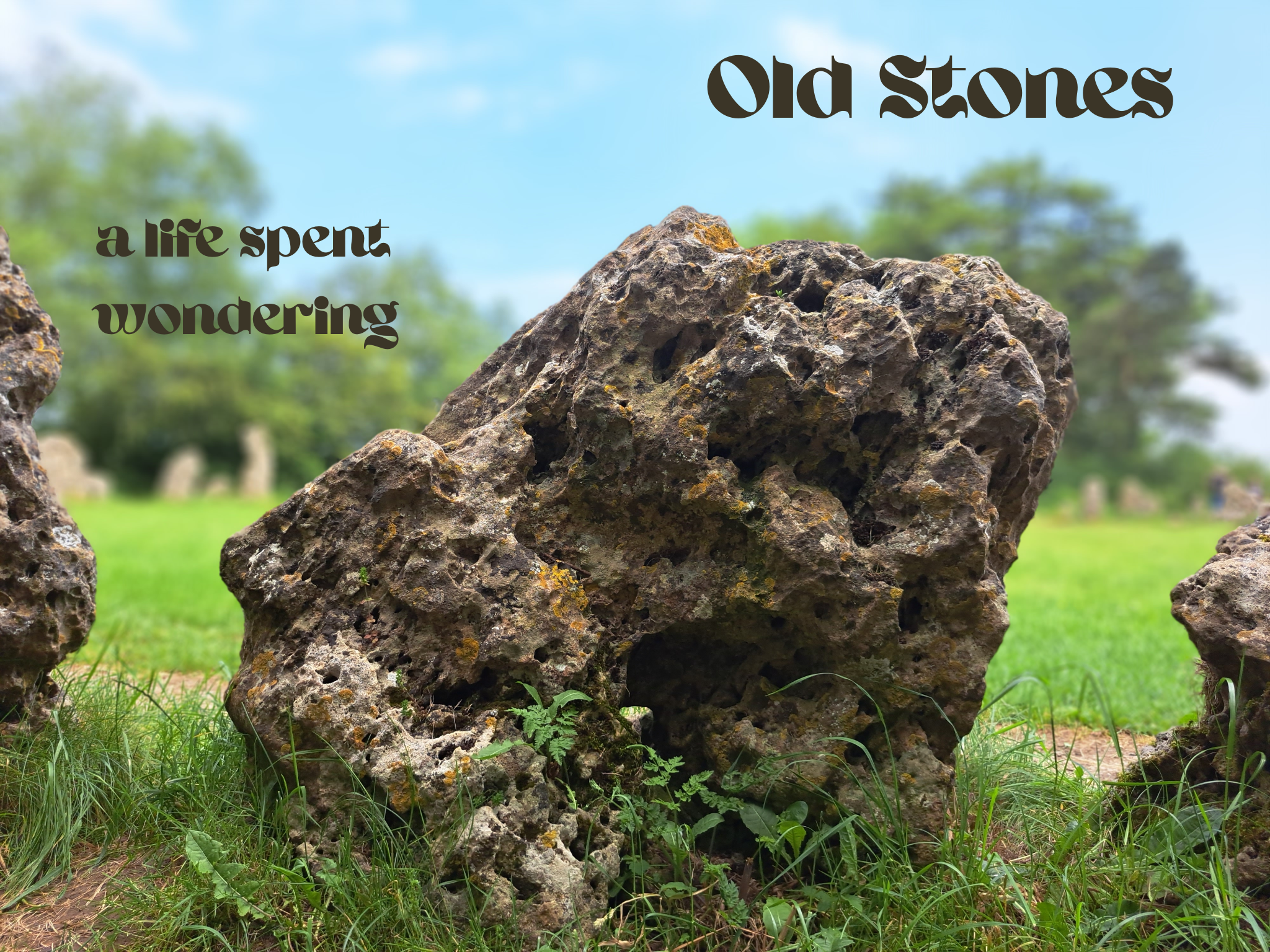
...the fort opens out in front of you, this wide grassland expanse on the top of the hill and this lovely weathered lump of oolitic limestone (satisfying to hold and say) really can't be mistaken for anything other than the creature it's named for.
How are we all today? Ready to be distracted from hideous reality with a slide back to the time of myths and legends? Not literally a slide back in time because, despite what people may say, you cannot go back to a lost time and not everything would have been good about it.
Note: working in museums, I'm often asked what age I would like to go back to (and the questioner does not mean my own physical age), to which the answer is NONE OF THEM. Have you seen the birth statistics, the toilet facilities, the prevalence of incurable diseases and absence of antibiotics? I wouldn't even go back to the fifties (feminism) and certainly not the forties (war), for all the fashions post-WWII were splendid.
But I do like a delve into myth, particularly when it is so firmly linked to place. So let us begin.
The previous post was based around a walk that I have done repeatedly since 1999: Bredon Hill and the walk to the Elephant Stone. If you have never been there...don't go. I mean, I'm sure you're lovely, but one of the nicest things about this place is that it is not as downtrodden by tourists as, say, it's close neighbours, the Malverns and the Cotswolds. In contrast, Bredon Hill* has always been something of a secret: the hill itself is low, ringed by villages that creep partway up and then retreat. There isn't a straight road between one settlement to the next.
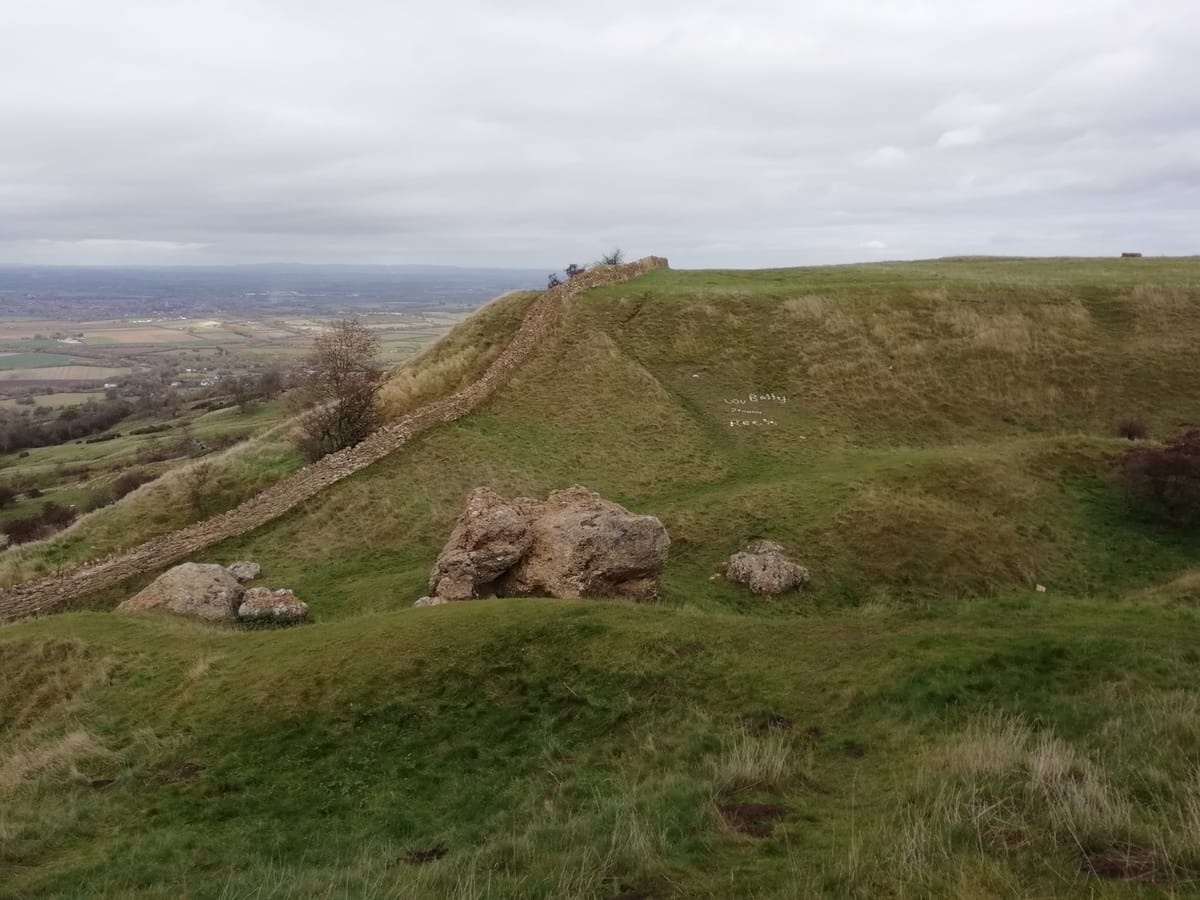
Once, a long time ago, there were settlements right on the top of the hill. A hillfort of such size and complexity that even today, the ring of defensive walls are a substantial structure and the wind chases bumblebees over their tops. If you look down over the landslip side, you can watch buzzards circling lazily on the air currents. Wait long enough and they will rise up and up above you, the whole sky their playground.
This, known as the Kemerton Camp (the name comes from one of the larger villages, from which you can reach this site, although that's not the way I go), was occupied until the 1st Century AD - or CE depending on your preference - when a huge final battle took place and the residents, the ones left standing, finally gave up the place for good. The poor shattered bones of defenders have been found during archaeological digs here.
During that time, the Dobunni tribe occupied the area. Their name is thought to come from bune meaning cup or vessel, which always reminds me of this sketch by Stewart Lee (what's wrong with cupping your hands?!), although there is also the suggestion that it comes from bouda meaning victorious, which must have been a bitter pill right about the time the enemy was splitting a few skulls.
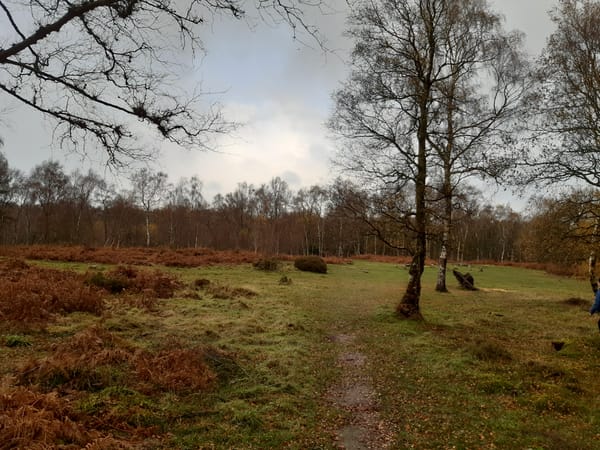
Coming in from my path (yes, I think of it as 'mine'), the fort opens out in front of you, this wide grassland expanse on the top of the hill. Ignore the folly, an eighteen century nonsense existing purely to fulfill a wealthy man's arrogance, and move past it down into the dip where the Elephant Stone resides. This lovely weathered lump of oolitic limestone (satisfying to hold and say) really can't be mistaken for anything other than the creature it's named for.
Officially, I believe it's called the Banbury stone, taken from Baenintesburg, which is what the fort was called in the eighth century. This is sort of pleasing to me as I have family links to Banbury - the town in Oxfordshire just far enough from Oxford to be somewhat affordable - but it has none of the romance and strict adherence to physical appearances of the colloquial name.
As a side: I note that my brother in law lists a painting called Baenintesburg on his website. Sold now, but others of his work are still available.
Our elephant folklore:
- To kiss it on Good Friday is bad luck
- That it's hiding some treasure underneath its solid form
- That, at the striking of midnight, it strolls down to the Avon to drink
- Some say that the midnight bell tolls have to be on New Year's Eve
The Modern Antiquarian has a decent amount of images and links to research, in which its easy to become lost and all of which are more stringently researched than anything I would have time to include here, but I must confess that mostly, I have an emotional reaction to this stone. To me it is home and each time I see it, I fling my arms as far around it as I can (not far at all). The elephant feels like the guardian of the place and as long as it remains holding vigil, the valley is safe.
What I wrote the other day felt like a short piece of psycho-geography, psy-geo-fic, if you will. And why not? Why not create a new category for something that falls outside of existing ones? The hill itself did not find its way into my book: I think because I write actual fiction from the imagination, not my reality. The elephant is too much a part of my history, from that formative time when my son was small and I was coming to terms with myself, who I was and what I wanted, to be fictionalised. It is in the bones of me. It inhabits the structure of my life from 1999 onwards. It is my lodestar, my waymarker.
My dog and I walked that path so many times, I can still hear him snuffling ahead with his joyous tail in the air; me following behind, head in the clouds, feet on the yellow road before me.