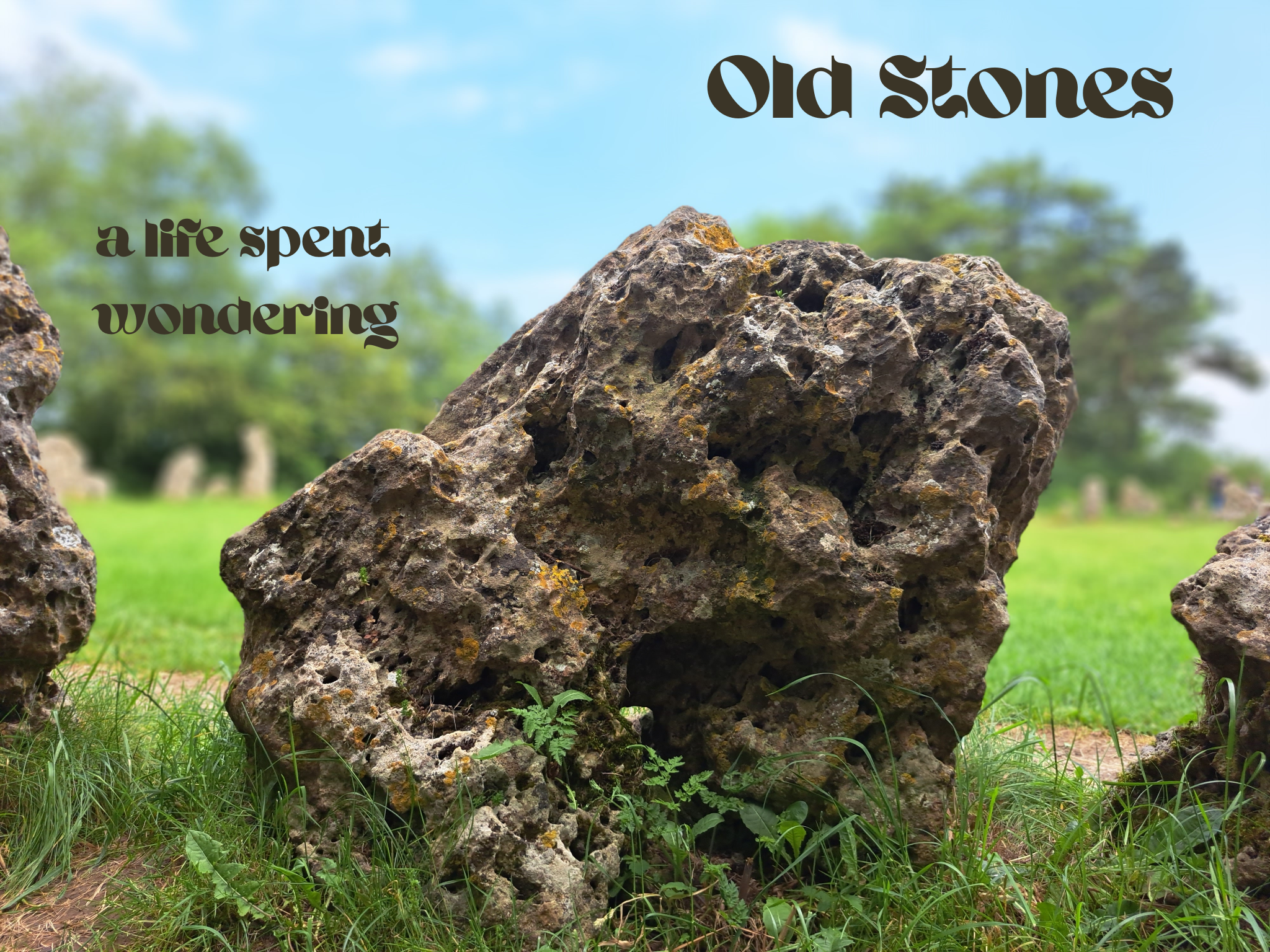
The oldest of Stones
In 2900BCE, an old people were here. They cut the rock from its bed, they shaped it, they transported it, they placed it in careful alignment to whatever dream or compulsion drove them to carry out this work.

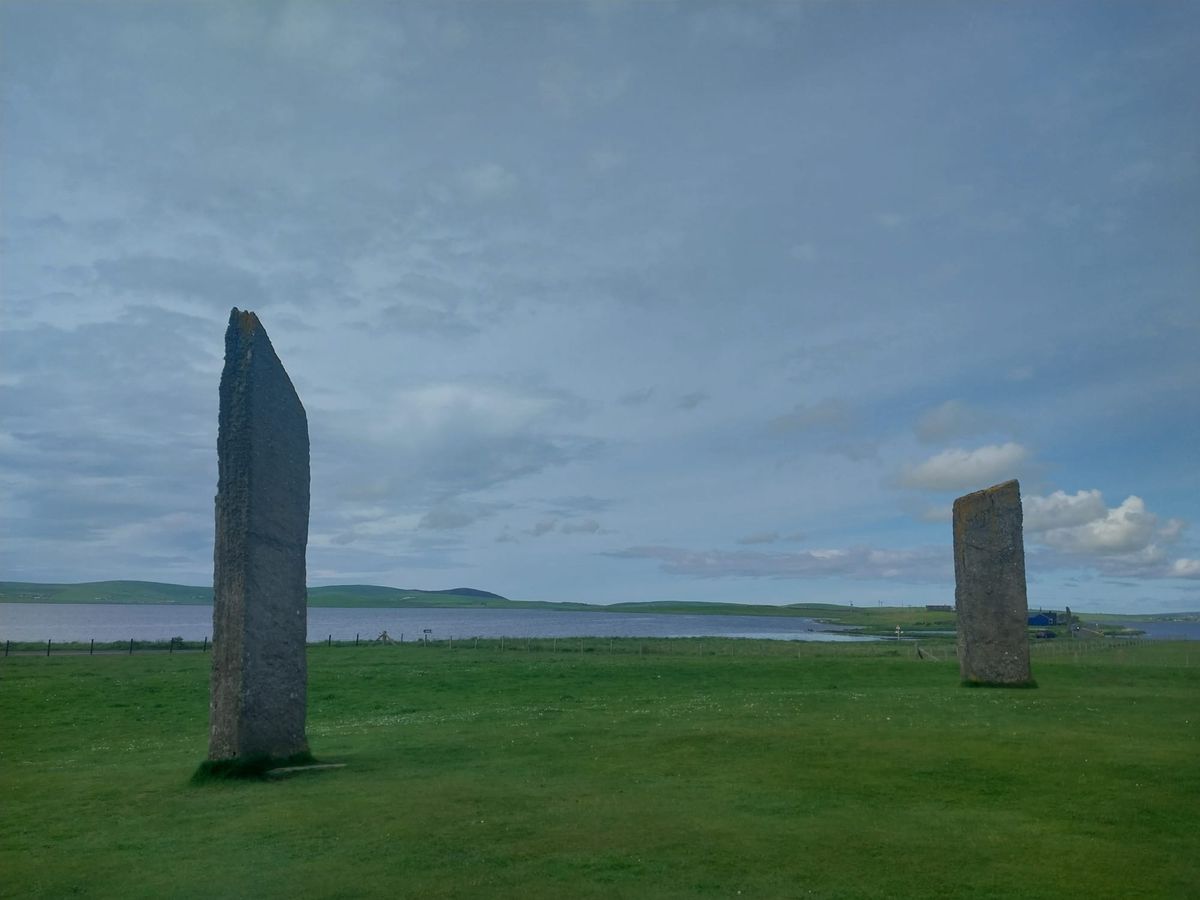
Last night I dreamed of Stenness again. The wind howling across the salt water lake and through the stones, goosebumps rippling up my arms, my neck. And I could not bring myself to turn to face what I knew was behind me.
There is something very otherworldly about Stenness. More so than Maeshowe, Brodgar and definitely more so than Skara Brae. Maeshowe is only enterable with a tour guide, so your visit is necessarily seen through the prism of their understanding and bias. Brodgar was roped off to allow the paths to recover so the stones were not in reach. And Skara Brae...well. Skara Brae counts as one of the worst experiences I've ever had: narrow paths over the houses, removed from them, trying to navigate around dozens of gossiping tourists and selfie-driven influencers all blocking said path. I was in and out of there in minutes.
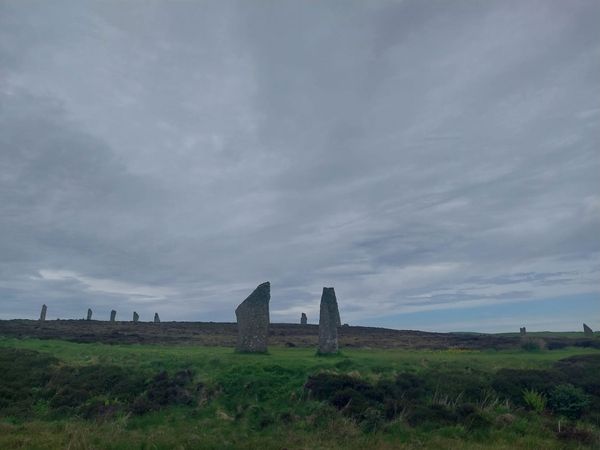
But Stenness. So easily overlooked, being only the four standing stones, the fifth prone amongst them. They are left open and vulnerable between Maeshowe and Brodgar, and we watch cars and coaches pull up in the little layby. People disgorge, stand for a moment to take the obligatory picture, then move on. When there are no cars, no people, there is only a silence that stretches out over the stones, the brackish water of the sea loch. It carries its own resonance and makes the place, despite the houses nearby, feel suddenly lonely, isolated. We are quiet within the incomplete circle.
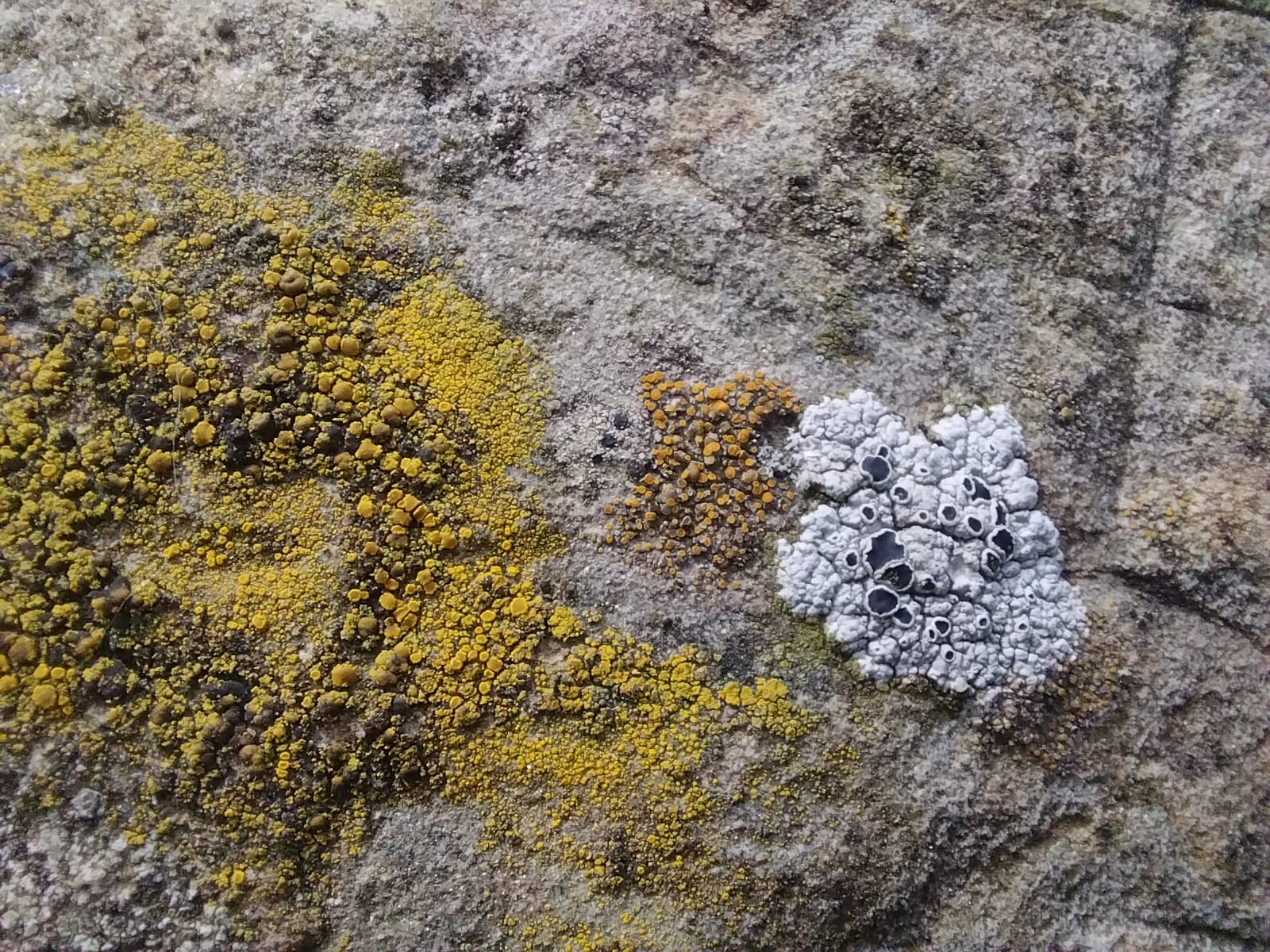
What those stop-and-photo crowds miss is the subtle beauty of these stones up close. The weathered grey is patched with lichen, candelariella reflexa, physcia aipolia, that almost - not quite - obscure the markings made by much older hands than mine.
In 2900BCE, an old people were here. They cut the rock from its bed, they shaped it, they transported it, they placed it in careful alignment to whatever dream or compulsion drove them to carry out this backbreaking work. They came together in their dozens, their hundreds, to create this unknowable thing, this vital thing. If you place your hands on the stones, you can feel the rock pulse with all that life, all that intent.
A little way from the ellipse of Stenness, the remains of the Barnhouse lie. To us, the site is almost devoid of activity beyond the tourists, the farmers whom we barely see. To the Neolithic people, this place was a village; it contained multitudes. Lives and dreams and hopes and petty conflicts and worries. People loved here, argued here, buried significant objects here. Today you can stand, tall in your 21st Century clothing and diet, bending down to peer at the small walls that are all that remain of homes. Today, a friend will photograph you in your yellow cardigan, laughing and joyful because you are here, in this strange and wonderful place, in all its false and modern isolation.
Back to the stones and they are weathered like trees, rippled by time like sands, marked with the initials of those who were looking for...what? What compulsion lead W to take up his penknife and carve his initial into something impossibly older than he? I will never understand it, any more than I understand those who carve their names into trees. W was here. W was ignorant. W was a narcissist who could not see a thing without thinking it would be improved with his mark on it.
W could have been a woman, but I'm not putting money on it.
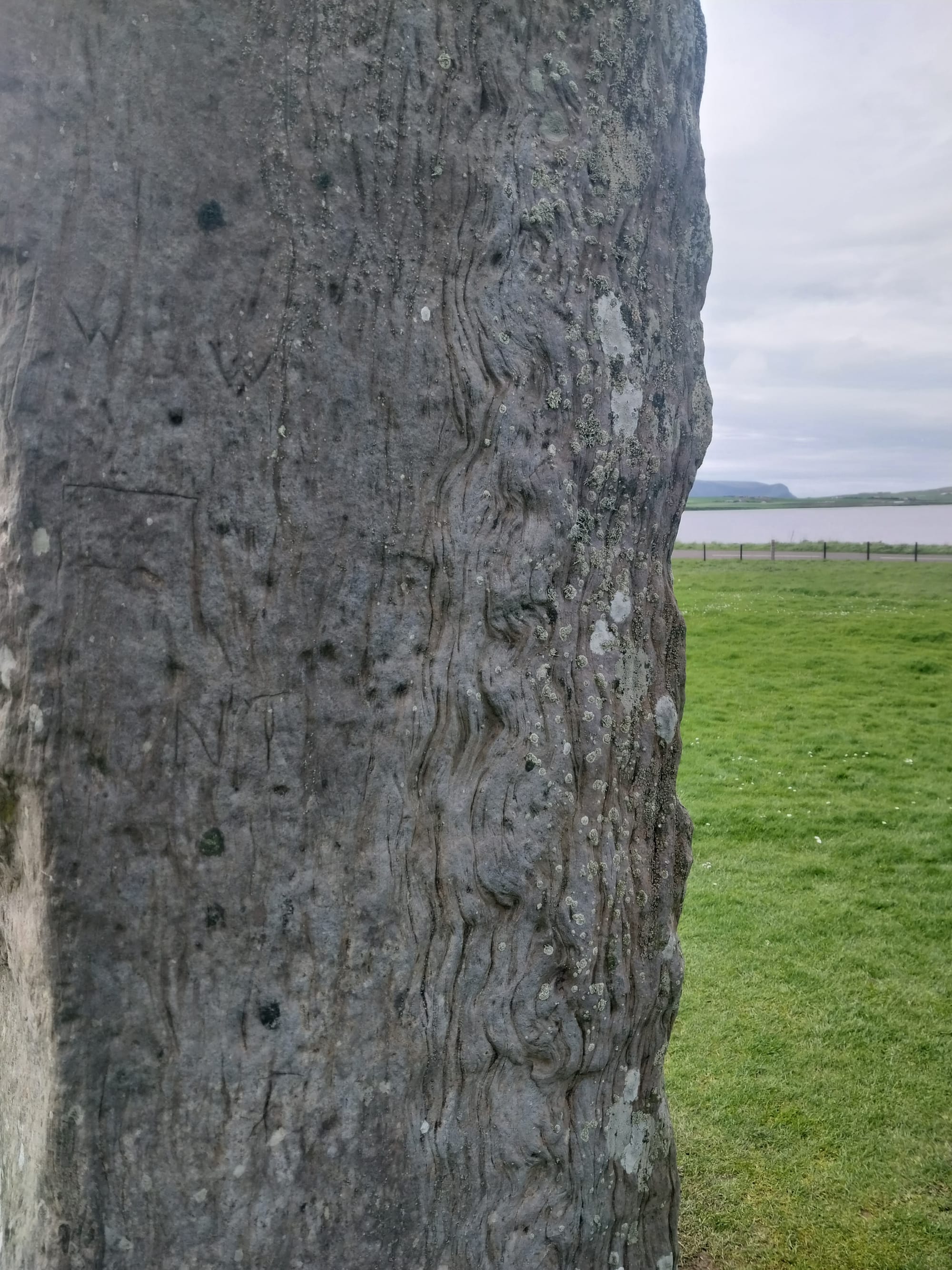
What I wanted to do was press clay into the surface, rub charcoal over paper, take an impression of the stones that was just for me. Sometimes, the camera is a poor substitute.
Last night I dreamed of Stenness again. The wind howling across the salt water lake and through the stones, goosebumps rippling up my arms, my neck. If I'd turned round, pushed hard enough against time, I could have seen them, I could have helped. I could have understood.